Thinking about installing an EV charger at home? You’re not alone.
As more Eastern Ontario homeowners switch to electric vehicles (EVs), understanding the different types of EV chargers and which one is right for your home has never been more important.
Zero-emission vehicle registrations in Ontario increased by 8.9% year-over-year in Q1 2025, and according to a recent CAA study, 69% of EV drivers report dissatisfaction with public fast charging availability.
Clearly, a reliable charging setup isn’t just convenient, it’s essential. Here are the main questions our EV charger installers answer:
- What are the Different EV Charger Types?
- How do each EV Charger Perform Differently?
- Can I Install an EV Charging Station Myself?
- Which EV Charger Should I Install?
What are the Different EV Charger Types?
Understanding your electric vehicle charging options is the first step toward making an informed decision.
There are three levels of EV chargers, each with distinct capabilities and use cases.
Comparing EV Chargers
| Level 1 | Level 2 | Level 3 | |
| Installation |
Plug into a regular outlet |
Requires a Licensed Electrical Contractor (LEC) & dedicated 240V circuit |
Commercial-grade electrical infrastructure required |
| Voltage |
120V |
240V |
400-900V |
| Charge Time (0%-100%) |
24-40 hours |
4-8 hours |
20-60 min |
| Best For |
Light daily driving or hybrids |
Most homeowners |
Commercial/public charging |
Level 1 EV Charger
Level 1 chargers are the most basic option available to EV owners.
These units don’t require any special installation; you simply plug them into a standard household wall outlet (120 volts).
Pros
Level 1 chargers are the most affordable option and require no installation costs beyond the unit’s purchase.
Cons
They’re also the slowest charging method available, typically taking 24-40 hours to fully charge a depleted EV battery.
Best For
Level 1 chargers are ideal for plug-in hybrid electric vehicles (PHEVs) with smaller EV batteries or for drivers with minimal daily commuting needs.
Level 2 EV Charger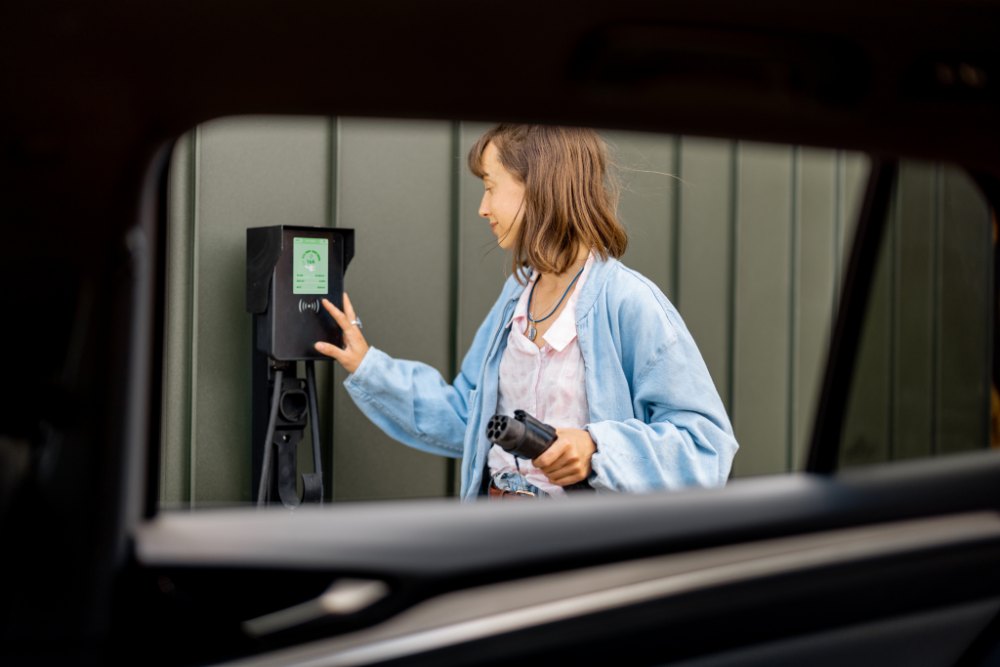
Level 2 chargers are the most common choice for residential installations.
Operating at 240 volts (the same voltage as your electric dryer or range), these chargers require professional installation and hardwiring into your home’s electrical panel.
Pros
Level 2 chargers offer significantly faster charging speeds than Level 1 units, typically completing a full charge in 4-8 hours.
Cons
The upfront investment is higher than Level 1 chargers, as you’ll need to factor in both equipment and professional installation costs.
Best For
Level 2 chargers are ideal for fully electric vehicles and anyone with longer daily commutes.
Level 3 EV Charger
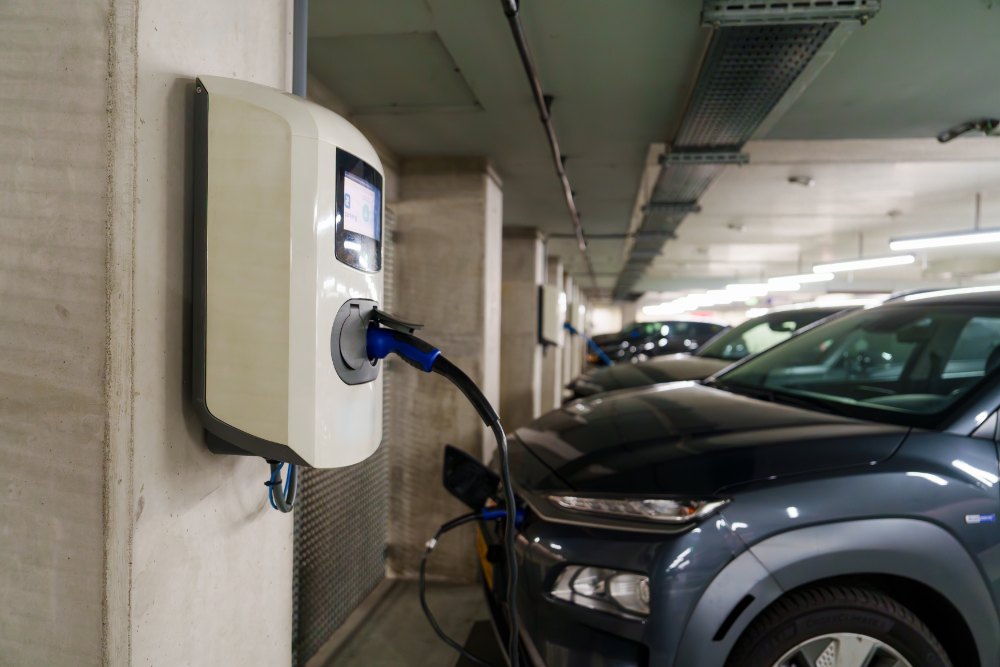
Level 3 chargers are the units you’ll typically see at a commercial charging station along highways, at shopping centres, and other parking areas.
Also known as rapid chargers, these high-powered systems take in 480V AC from the grid and convert it (typically in the 400–900V range) to match the needs of different EVs.
Pros
Many Level 3 chargers can bring an EV from a low state of charge up to 80% in about 20–60 minutes, depending on the vehicle and charger power level.
Cons
These units are extremely expensive and require commercial-grade electrical infrastructure. Additionally, not all EV models can accept Level 3 charging, and frequent use can potentially degrade battery health over time.
Best For
Level 3 chargers are designed for commercial and public charging applications, not residential use.
Considerations When Choosing an EV Charger for Your Home
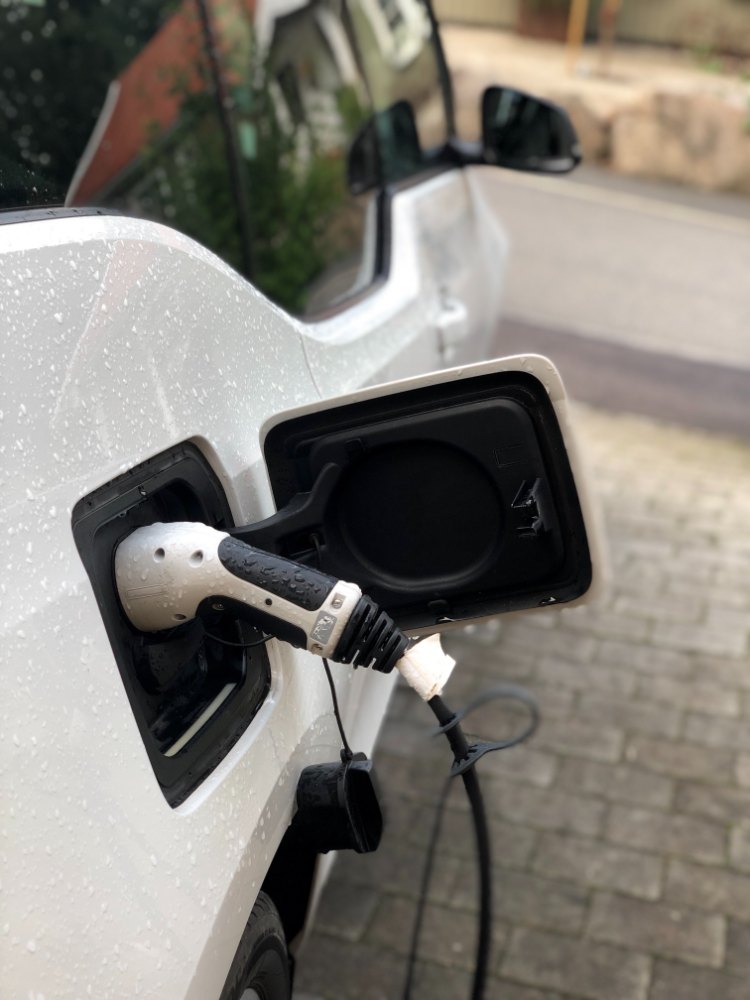 Selecting the right type of EV charger involves more than just comparing charging speeds.
Since Level 3 chargers are not suitable for home installation, here are the critical factors to evaluate between a Level 1 & Level 2 charger:
Vehicle’s Charging Capacity
Every EV has a maximum charging rate. A Level 2 charger will speed up charging compared to a Level 1, but only up to your vehicle’s limit.
Using a charger that exceeds that limit is safe; it just won’t charge any faster than your EV allows.
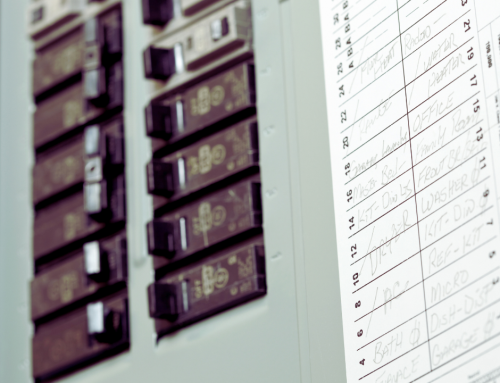
Electrical Panel Capacity
Your home’s electrical panel must have sufficient capacity to support an EV charger, particularly for Level 2 installations, as they require hardwiring.
A licensed electrician can assess whether you need an electrical panel upgrade to safely accommodate the additional electrical load.
Daily Driving Distance
Consider your typical daily mileage. If you drive 30-40 kilometers per day, a Level 1 charger might suffice.
However, longer commutes or frequent road trips make Level 2 charging essential to ensure your vehicle is ready for your daily commute.
Installation Location
Will your charger be mounted in a garage or outdoors?
Outdoor installations require weatherproof, cold-rated units designed to operate reliably through Eastern Ontario’s harsh winters.
The distance from your electrical panel to the charging location also affects installation complexity and cost.
Can I Install an EV Charging Station Myself?
While it might be tempting to save money with a DIY installation, installing Level 2 or Level 3 EV chargers yourself is illegal and unsafe in the province of Ontario.
Legal Requirements in Ontario
EV charger installations are governed by strict regulations:
- According to the ESA, all electrical work in your home (including EV charging station installations) must be performed by a Licensed Electrical Contractor (LEC) with an ECRA/ESA licence
- Installation requires an electrical permit through the ESA
- Work must comply with the Ontario Electrical Safety Code (OESC)
These requirements exist for good reason; they protect both homeowners and the electrical grid.
Risks of DIY Installation
Attempting to install a Level 2 EV charger without proper licensing carries serious consequences:
Electrical Shock
Working with 240-volt circuits poses a significant electrocution risk, especially for those without professional training in electrical systems.
Fire Hazard
Improper wiring, inadequate wire gauge, or loose connections can create dangerous heat buildup, potentially leading to electrical fires.
Insurance Complications
If an electrical fire occurs due to unpermitted work, your home insurance company may deny your claim. Many policies explicitly exclude coverage for work performed without proper permits and licences.
Equipment Damage
Incorrect installation can damage both your expensive EV charger and your vehicle’s charging system, leading to costly repairs that far exceed professional installation costs.
Code Violations
Unpermitted electrical work can create complications when selling your home, as inspections may reveal the unauthorized modifications.
Making the Right Choice for Your Home
For most Eastern Ontario homeowners, a Level 2 charger is the right choice for charging speed, convenience, and long-term value.
At ATEL Electric, our licensed electrical contractors specialize in safe, code-compliant EV charger installations for any EV model like Polestar and Tesla vehicles.
We assess your home’s electrical system, recommend the right charger, and complete the installation with care. We’ve been the charging experts in Kemptville and Eastern Ontario for years!
Ready to install your home EV charger?
Contact us today for a free consultation and quote.